The importance of arch support for cyclists
There are 26 bones in the foot and during the power phase of a pedal stroke, 19 of them are actively transferring force to the pedal. To do so efficiently and painlessly, the foot needs effective support.
Russell Gordon
11/3/20254 min read
The special case of cycling
The construction of the foot, in particular the arch, has evolved over millennia to support the entire body-weight. Hence we are perfectly adapted to walking and running.
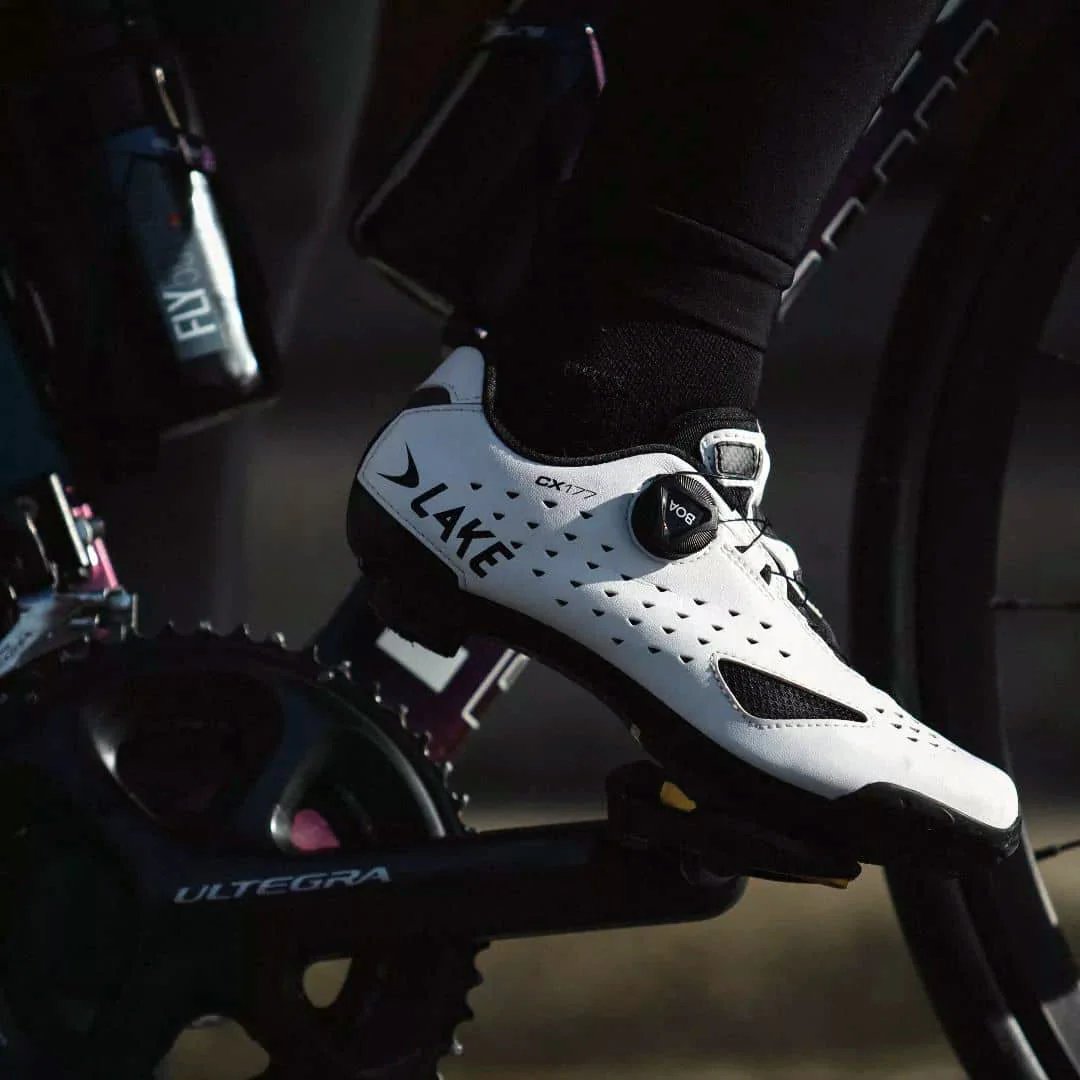
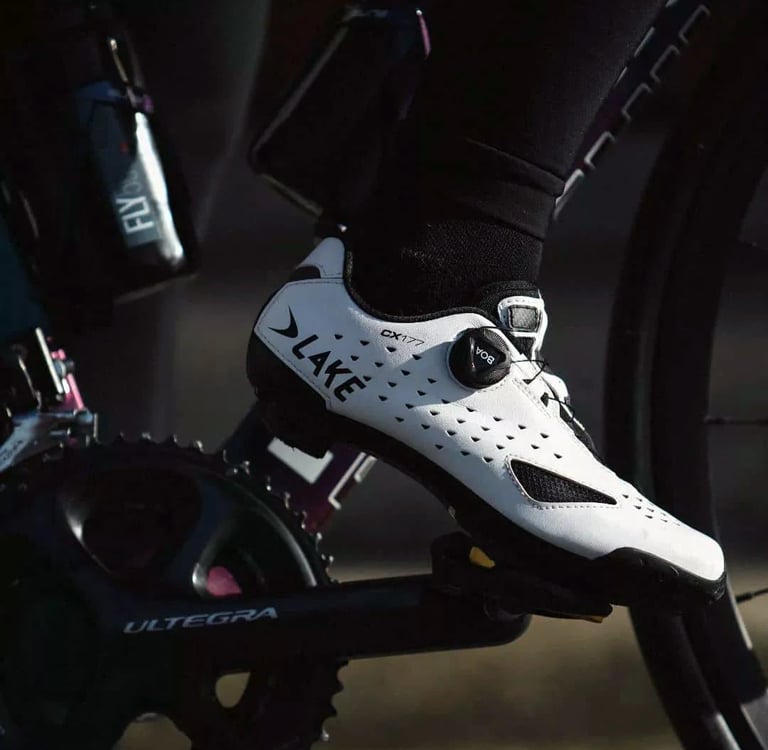
The bike though, has existed for less than 150 years and (when ridden with clipless pedals) means the body is locked firmly into a fixed position. This is the fundamental problem that led to the evolution of Bike Fit: fitting a vast array of slightly squidgy human beings to a very rigid, symmetrical machine.
Before we delve into the issues caused by being locked in a rigid position, we need to talk about something called proprioception.
Proprioception
Proprioception, otherwise known as kinesthesia, is your body’s ability to sense movement, action, and location. The body uses proprioceptors which are specialised sensory receptors on nerve endings found in muscles, tendons, joints and the inner ear. Proprioceptors detect subtle changes in the environment, movement, position, tension and force. The main function of proprioception is to prevent injury.
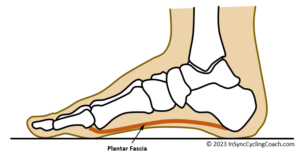
In order to facilitate walking, running or cycling, the brain needs to know which muscles to fire and in what order. It reaches these decisions through proprioceptive feedback from (predominantly) the feet, more specifically through plantar fascia tension.
The plantar fascia is a band of tissue (fascia) that connects your heel bone to the MTP (metatarsophalangeal) joints. As we walk and run, plantar fascia tension changes, providing effective proprioceptive feedback to the brain. Conversely, when we press down on the pedals through a typical cycling shoe, there is little or no change in plantar fascia tension. This is because (almost all) cycling shoes have an arch support which is so flimsy there is little or no meaningful contact between the insole and the arch of the foot. By meaningful, I mean the insole provides little or no resistance to the compression of the arch, caused by pressing down on the pedals. This means that when cycling, the brain does not get the proprioceptive feedback it needs to determine where the feet are in space.
The problems caused by poor arch support
So why does this matter? There are two main side effects.
Firstly, over time the muscles of the foot fatigue or atrophy, causing the bones to collapse onto the nerve endings and blood supply. Not addressing this early enough can lead to severe problems such as plantar fasciitis (inflammation of the plantar fascia), and Moreton’s neuroma (numbness and/or tingling in the feet or toes). Other indications of damaged foot muscles are temperature control-issues where the feet are either too cold or hot (so-called ‘hot foot’).
Secondly this lack of proprioceptive feedback, combined with the fact that the forefoot is locked into the pedals, frequently leads to asymmetrical compensations. When the brain is unsure about the position of the feet whilst cycling, the only accommodation the body can make is at the knees and hips.
Ever wondered why you sit off-centre on the saddle? Or maybe you’ve noticed that one knee kicks-out at the top of the pedal stroke? These are typical responses the body makes to compensate for lack of awareness of the feet’s position in space, which in turn is largely (but not exclusively) due to poor arch support.
So which type of arch support should you use?
By providing the arch with firm, but flexible support, we allow good power transfer and start to provide the brain with that positional feedback it’s been starved of with conventional insoles.
I categorise them in three types:
1. Off-she-shelf insoles
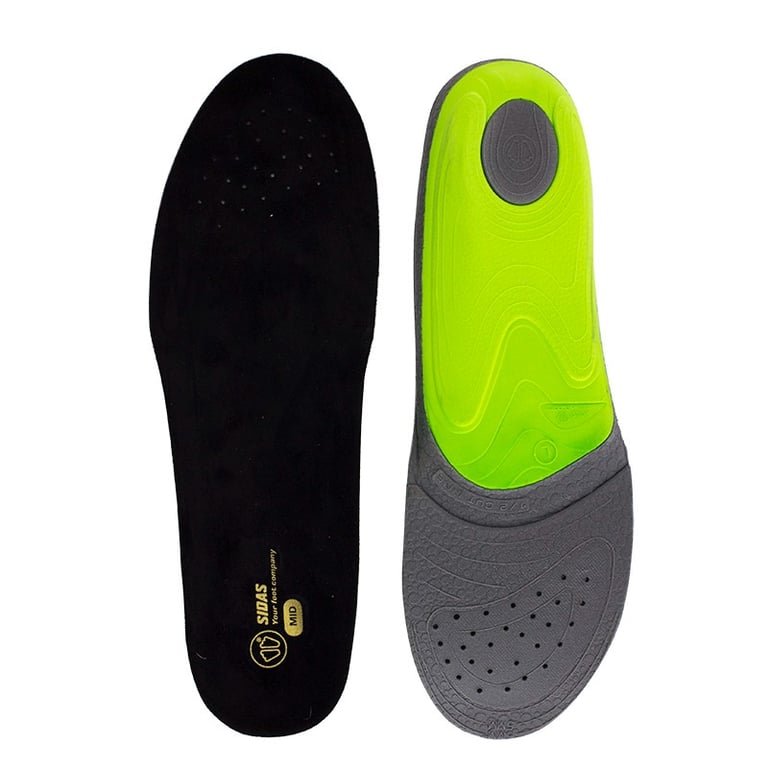
These are are a very cost-effective solution for most people and provide infinitely more support than the standard, floppy insoles sold with almost all cycling shoes. However there is no adjustment possible so you may not find quite the right level of support.
Pros: Low cost. Easy to install.
Cons: Limited number of support 'levels' e.g. low, medium, high. No adjustment of position of the arch support. Difference levels of support between left and right not possible.
2. Semi-customisable insoles
Some insoles have removable, adjustable inserts on the insole. This gives the opportunity to have different levels of arch support for each foot independently. The position fore-aft and medial-lateral can also be adjusted. They also allow the foot to flex in a natural way whilst still supporting the arch.
Pros: Customisable for each foot. Arch support position and level can be changed post-fit.
Cons: More expensive than off-the-shelf. May not be suitable for very high power riders e.g. track sprinters.
3. Fully-custom, heat-mouldable insoles
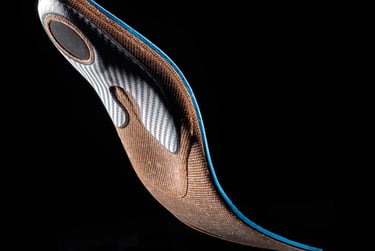
Heat-mouldable insoles provide an excellent solution as they can be tailored exactly to the contour of each foot. For strong riders they can provide a solid base on which to press without any loss in power. They require specialist equipment and a trained technician to fit.
Pros: Fully customisable. Perfect power transfer.
Cons: Can be expensive. Require an experienced fitter and can’t be modified.
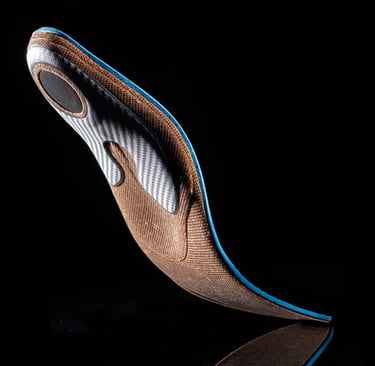
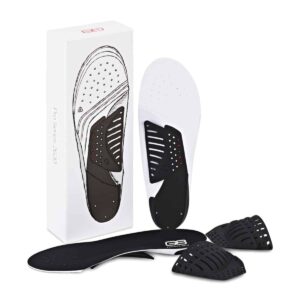
I am fortunate in that I can now offer all of the above types of insoles for my clients. Check-out my services page if you wish to elevate your cycling comfort and efficiency
Connect
Follow us for tips and advice.
Contact
russell@insynccycling.co.uk
07490 958136
© 2025-26. All rights reserved.
Get in touch for expert support.